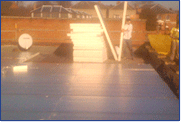
Step 1: Insulation
Insulation board is laid over existing roof prior to waterproofing. This board will often meet the requirements for heatloss. The joints between the boards are sealed with aluminium reflective tape.
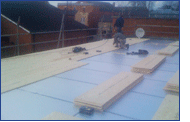
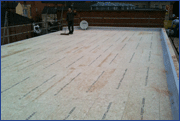
Step 2: Decking
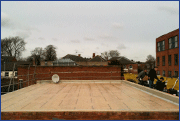
The insulation has been laid, an 18mm deck is laid and fixed using extra long index screws to allow fixing through the deep insulation into the roof structure beneath. OSB3 is a strong, versatile board suitable for structural use in humid conditions, ideal for applications as diverse as roofing, flooring, hoarding and wall sheathing etc.
It is the perfect substrate for laminating Glass Reinforced Polyester (GRP or Fibreglass).
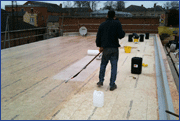
Step 3: Waterproofing Application
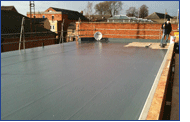
The pre-formed edge trims are then fixed to the roof perimeters and any detail. The GRP is then applied by wet laying a layer of polyester resin onto the roof and embedding a layer of chopped-strand fibre-glass matt into it. A further layer of resin is applied and the air is then forced out of the layers using a roller paddle. Once the resin has set the roof is waterproof. The finished result is a very hard wearing surface that cannot be pierced or split under normal circumstances.
Step 4: After Waterproofing
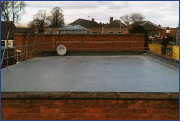
The roof after the GRP has been applied is translucent and although it is fully waterproof, a further layer of polyester topcoat is required to protect the roof from UV degradation and to give a pleasing aesthetical finish.
This usually comes in dark grey, although any colour can be added to a clear topcoat and mixed using special pigments.
Step 5: Keycoat Application
To reduce the risk of water ingress, the GRP is extended over the top of parapet walls prior to the re-bedding of the coping stones. To enable a good bond between the copings and the GRP surface, a layer of slate chippings or kiln dried quartz is scattered into the wet resin before it sets. This allows the mortar to key and prevent slippage. The GRP layer will prevent water ingress between the joints in the copings once these begin to degrade.